 EN

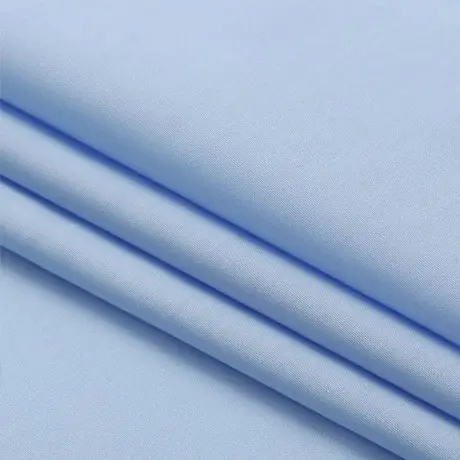
Decoding GSM and Thickness Standards for Shirting
Choosing the right thickness for poly cotton shirting fabric is a fundamental technical decision that directly shapes a garment’s drape, opacity, thermal performance, and overall durability. Across international textile manufacturing, fabric weight is scientifically categorized using GSM (Grams per Square Meter), moving well beyond vague or subjective descriptions like heavy or lightweight. Industry textile research highlights that carefully balancing polyester and cotton yarn ratios ensures that dimensional stability remains exceptionally high across varying weight tiers. Technical teams thoroughly evaluate thread counts, warp and weft densities, and fiber micronaire values to forecast how specific fabric weights will react to commercial laundering and everyday wear. Understanding these precise metrics empowers global apparel brands and procurement managers to match fabric thickness accurately with intended end uses, bridging the gap between raw fiber engineering and end-user comfort. Furthermore, relying on standardized thickness parameters helps streamline global supply chains, minimizing batch inconsistencies and ensuring consistent quality across mass production runs.
Lightweight Sub-tropical and Formal Dress Shirts
When designing apparel for hot climates, humid environments, or crisp formal dress shirts, lightweight poly cotton shirting fabrics ranging from ninety to one hundred ten GSM serve as an ideal choice. Practical manufacturing audits and mill evaluations show that lightweight blended poplins in this tier dry significantly faster and offer superior moisture management compared to traditional 100 percent cotton alternatives. Textile engineering reviews point out that utilizing finer yarn counts woven into lower GSM structures allows steady convective airflow while successfully maintaining necessary opacity. This careful structural balance ensures that corporate professionals, hospitality teams, and service staff remain cool and comfortable during long shifts without sacrificing a polished, professional aesthetic. Advanced weaving techniques further ensure that these lighter fabrics maintain impressive tear strength despite their fine profile, making them a popular staple for warm-weather seasonal collections worldwide.
All-Season Business Wear and Mid-weight Versatility
Striking a reliable balance between structural support and soft tactile comfort, mid-weight poly cotton shirting spanning one hundred ten to one hundred forty GSM forms the backbone of standard office wear collections. Commercial data confirms that this specific weight category delivers optimal opacity, completely eliminating the need for unwanted layering while offering exceptional crease recovery throughout demanding workdays. By utilizing well-balanced blend ratios, these fabrics harness the superior tensile strength of polyester fibers to noticeably reduce post-wash wrinkling, drastically cutting down ironing requirements for busy consumers and commercial laundries alike. Independent laboratory testing confirms that mid-weight fabrics endure repeated industrial wash cycles with minimal shrinkage or surface pilling, delivering a garment lifecycle that comfortably outperforms natural fiber equivalents. This dependable durability makes mid-weight options a cost-effective, high-value solution for corporate uniform programs and everyday retail apparel brands seeking low-maintenance performance.
Structured Uniforms and Heavy-weight Workwear
When absolute durability, rugged tear resistance, and mechanical protection take priority over soft drape and lightweight airflow, heavy-weight poly cotton shirting and twill constructions become essential. Frequently deployed in industrial workwear, security uniforms, and outdoor utility apparel, these dense structures incorporate higher polyester content or robust twill weaving configurations. Materials science studies indicate that increased fabric mass per square meter correlates directly with enhanced abrasion resistance and physical shielding against demanding workplace conditions. Despite their heavier build, expertly engineered poly cotton blends successfully avoid the stiff, clammy discomfort frequently associated with pure synthetic fabrics, ensuring that heavy-duty uniforms remain ergonomic and comfortable through years of tough daily use. Strict adherence to rigorous international quality benchmarks ensures that these heavier fabrics retain vibrant colorfastness, structural integrity, and chemical resistance even after enduring numerous heavy-duty wash cycles.
Supply Chain Excellence and Tailored Solutions with Hebei Gaibo
Navigating the technical nuances of fabric thickness and blend selection requires a manufacturing partner backed by extensive industry expertise, advanced machinery, and reliable supply chain infrastructure. Hebei Gaibo utilizes decades of specialized experience spanning fiber spinning, advanced weaving, and global export logistics to deliver premium poly cotton shirting solutions. Operating state-of-the-art manufacturing facilities capable of producing customized blended fabrics—ranging from delicate poplins to rugged workwear twills—Hebei Gaibo maintains strict quality assurance protocols at every stage of production. By seamlessly blending international textile testing standards with flexible B2B fulfillment capabilities, Hebei Gaibo helps apparel brands worldwide scale efficiently with fabrics tailored precisely to regional climate demands and performance expectations. Partnering with Hebei Gaibo guarantees transparent communication, responsive sample development, and dependable bulk delivery, laying a solid foundation for long-term brand success.
