EN
EN

Flame Resistance in Twill Workwear Fabric: Inherent Properties vs. Treatment
How Twill Weave Structure Influences Thermal Protection and Ignition Resistance
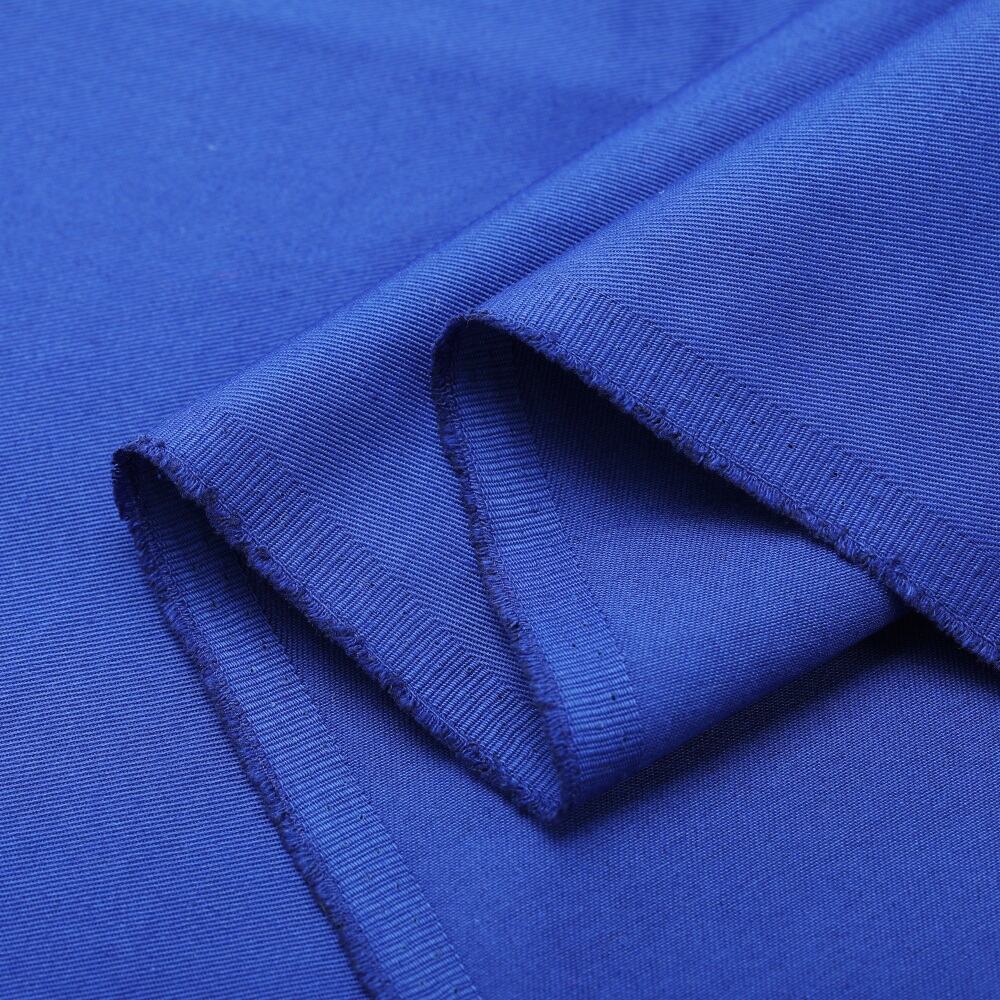
Twill’s diagonal rib pattern increases structural density, which modestly delays ignition by restricting airflow between yarns. During thermal exposure, the raised ridges create micro-buffer zones that slow heat transfer—but this effect is secondary to fiber composition and finish. Untreated cotton twill ignites in under 4 seconds in ASTM D6413 vertical flame tests, confirming it offers no inherent flame resistance. That said, the weave’s surface consistency supports more uniform char formation when treated with FR chemicals, improving protective carbon layer integrity. Fabric weight remains the dominant physical variable: 12oz twill delivers 40% greater burn-through resistance than 7oz versions under identical test conditions.
Treated vs. Inherently FR Twill: Performance, Compliance, and Longevity
The distinction between treated and inherently FR twill lies in how flame resistance is achieved—and how reliably it lasts:
| Feature | Inherently FR Twill | Treated FR Twill |
|---|---|---|
| Flame Resistance | Molecular property of modified fibers (e.g., aramids) | Chemical coating applied post-weave |
| Durability | Stable through 100+ industrial washes (AATCC 135) | Begins degrading after ~50 washes |
| Comfort | Superior moisture-wicking; softer hand feel | Stiffer, less breathable due to chemical residue |
| Compliance | Permanently meets NFPA 2112/2113 requirements | Requires annual recertification per OSHA guidelines |
Inherent FR twill relies on thermally stable fibers that swell into insulating barriers upon exposure—ensuring consistent protection across the garment’s lifecycle. Treated variants depend on reactive phosphorus or nitrogen-based chemistries absorbed into cotton; UV exposure accelerates degradation, reducing efficacy by 15–20% annually. For high-risk electrical work, inherent FR extends service life threefold versus treated alternatives—though at a 60% higher initial cost. Always verify dual certification to ASTM F1506 and ISO 11612, as these standards validate both arc flash and convective/ radiant heat protection for industrial FR twill workwear.
Water Resistance of Twill Workwear Fabric: Weave, Fiber, and Finish
Does Twill Weave Geometry Provide Natural Water Repellency?
Twill’s denser surface—relative to plain weaves—delays initial water absorption, causing brief beading on contact. However, its diagonal structure still contains microscopic inter-yarn gaps, making it naturally water-resistant, not waterproof. Standard cotton twill permits full water penetration within 20–30 seconds of continuous exposure, per AATCC 42 hydrostatic pressure testing. Even denser variants like drill twill only marginally improve performance; they fall significantly short of truly low-permeability fabrics such as tightly woven duck canvas, where extreme yarn compaction minimizes moisture pathways.
Impact of Fiber Choice (Cotton, Polyester, Blends) on Moisture Management
Fiber selection governs twill’s fundamental interaction with water. Cotton absorbs up to 27% of its weight in moisture (Textile Testing 2022), leading to swelling, reduced dimensional stability, and compromised barrier function when wet. Polyester, by contrast, is hydrophobic—its polymer chains resist water absorption and extend surface drying time by 300% compared to cotton in identical twill constructions. Optimized blends (e.g., 65/35 polyester-cotton) strike a functional balance: polyester limits saturation while cotton maintains breathability and comfort. Contact angle analysis confirms this divergence—polyester surfaces register >90° angles (indicating strong repellency), while cotton measures <60° (signaling rapid wicking). These measurable differences directly influence real-world performance in rain, spills, or high-humidity environments.
Dual-Performance Twill Workwear Fabric: Balancing FR Safety and Weather Readiness
Integrated Solutions: Durable Water-Repellent (DWR) + FR Finishes on Twill Workwear Fabric
Modern dual-performance twill combines flame resistance and water repellency through sequential, compatible chemical finishing—not simple co-application. First, FR agents are embedded into the fiber matrix during yarn or fabric processing to ensure molecular-level stability. Then, a fluorocarbon-free DWR treatment is applied to the surface, creating a hydrophobic top layer that encourages water beading without masking or interfering with underlying FR functionality. This layered approach preserves breathability and flexibility while meeting rigorous industrial expectations: field trials show DWR reduces moisture saturation by 70–80%, and FR formulations suppress melt-drip behavior—critical for preventing secondary burns in flash-fire scenarios.
Real-World Validation: NFPA 2112 + AATCC 22 Testing Outcomes for Dual-Function Twill
Dual-certified twill must pass both NFPA 2112 (flash-fire) and AATCC 22 (water repellency) protocols to validate integrated protection. Under NFPA 2112, compliant fabric must limit char length to ≤102 mm and afterflame duration to ≤2 seconds. Simultaneously, AATCC 22 spray ratings assess surface wetting on a 0–100 scale—where ≥80 indicates minimal penetration and effective beading. Dual-treated twill consistently achieves both benchmarks. Third-party lab verification confirms retention of both properties through 50+ industrial launderings when maintained per manufacturer care instructions—validating durability for petrochemical, utility, and refinery applications where simultaneous thermal and environmental hazards are routine.
How Twill Workwear Fabric Compares to Alternatives in High-Risk Environments
Twill workwear fabric stands apart from common alternatives—canvas and denim—in its ability to balance durability, mobility, and adaptability to advanced safety finishes. Its diagonal weave enhances tear resistance without sacrificing flexibility—essential for dynamic tasks near ignition sources or wet surfaces. Canvas prioritizes abrasion resistance but suffers from stiffness and poor moisture management; denim, though comfortable, absorbs water readily and lacks any inherent flame resistance—making both reliant on coatings that compromise wearability or degrade quickly. In contrast, twill’s hybrid fiber potential allows strategic optimization: polyester-cotton blends demonstrate 20% longer mechanical lifespan than pure cotton equivalents in industrial case studies, lowering total cost of ownership.
When evaluating fabric suitability for complex hazard environments, consider these comparative strengths:
| Fabric Type | Durability | Comfort/Mobility | FR/Water Resistance Potential |
|---|---|---|---|
| Twill | High tear resistance, moderate abrasion resistance | Flexible, breathable, softens with wear | Adaptable via fiber blends and dual-performance finishes |
| Canvas | High abrasion resistance, stiff structure | Limited flexibility, poor moisture-wicking | Often requires bulky coatings that reduce comfort |
| Denim | Moderate durability, prone to seam failure | Comfortable but heavy when wet | Minimal inherent protection; treatments wash out quickly |
This versatility positions twill not as a compromise—but as a purpose-built solution for high-risk sectors demanding concurrent flame resistance, weather readiness, and long-term wearability. While heavier fabrics may outperform in isolated metrics (e.g., canvas in abrasion-only tests), twill delivers integrated protection where it matters most: at the intersection of human performance and hazard mitigation.
FAQ
Q: What is the difference between treated and inherently flame-resistant twill?
A: Treated twill uses chemical coatings to provide flame resistance, while inherent flame resistance is built at the molecular level in specially designed fibers like aramids. Inherently resistant fabrics typically last longer and offer more consistent performance through extended use and laundering.
Q: Does twill fabric provide natural water resistance?
A: Twill's dense weave offers modest water resistance by delaying absorption, but natural twill is not waterproof. Fibers like polyester or specific treatments, such as DWR (Durable Water Repellent), significantly enhance water repellency.
Q: How long do dual-treated twill fabrics maintain their performance?
A: Dual-treated twill fabrics maintain their flame resistance and water repellency for over 50 industrial launderings when cared for according to manufacturer instructions, ensuring durability in hazardous environments.
Q: How does twill compare to canvas for workwear?
A: Twill balances durability and flexibility better than canvas. While canvas offers superior abrasion resistance, it is less comfortable and wicks moisture poorly. Twill, especially with fiber blends and treatments, provides enhanced wearability, adaptability, and protection in high-risk tasks.