EN
EN

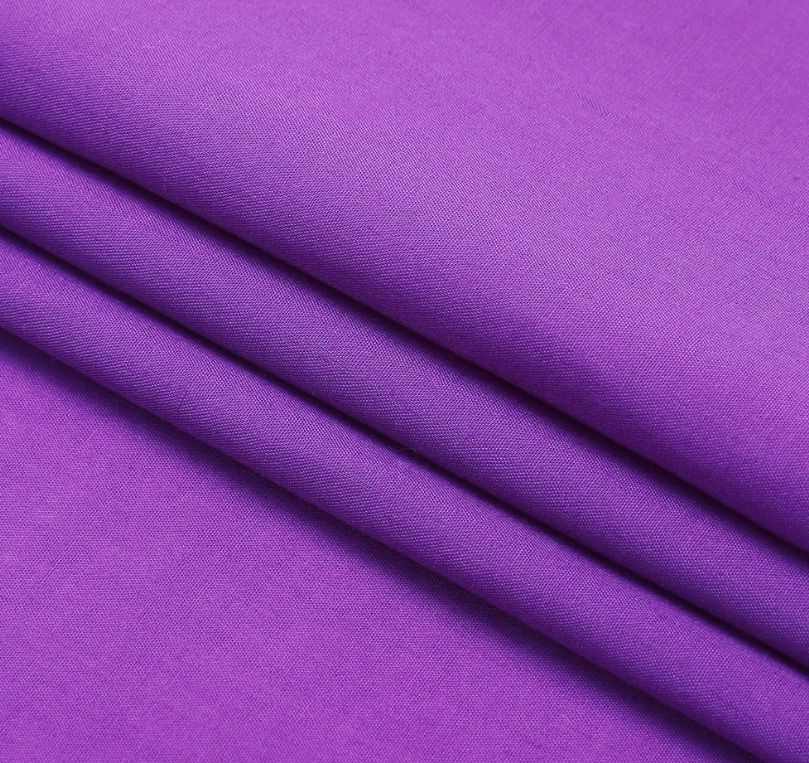
Superior Durability and Tear Resistance for Demanding Work Environments
How the Twill Weave’s Diagonal Ribbing Enhances Structural Integrity and Load Distribution
The diagonal ribbing of the twill weave is a foundational reason for its exceptional durability in demanding work environments. Unlike plain weaves, its staggered interlacing creates a denser, more stable fabric structure that distributes mechanical stress across multiple yarns. When workers bend, stretch, or lift, tensile forces travel along the diagonal lines—preventing concentration on any single thread. This inherent load-distribution mechanism significantly reduces the risk of localized failure under repeated strain. Independent laboratory testing confirms twill fabrics endure 30–50% more tension cycles before fraying than comparable-weight plain-weave alternatives. Crucially, the diagonal pattern also impedes tear propagation: if a snag occurs, the weave contains it, limiting damage to a small area rather than allowing it to run across the fabric. For mechanics, welders, and construction crews who depend on clothing that performs reliably through long, abrasive shifts, this translates directly into extended garment life and lower total cost of ownership.
Proven Abrasion Resistance in High‑Friction Industrial Settings
Twill workwear fabric also excels where surface wear is relentless. Its raised diagonal ridges form a durable, sacrificial layer that absorbs abrasive contact—whether from tool belts, concrete floors, or metal edges—before underlying fibers are compromised. Field evaluations in automotive repair and metal fabrication facilities show twill garments retain structural integrity up to 40% longer than cotton duck or drill fabrics under equivalent scuffing conditions. The tight weave further resists pilling and fiber migration, even after dozens of industrial launderings. For workers who regularly kneel, crawl, or brace against rough surfaces, this abrasion resistance means fewer blowouts at high-wear zones like knees and elbows—preserving protective coverage without restricting mobility.
Low-Maintenance Performance: Stain, Soil, and Wrinkle Resistance
Soil-Hiding Texture and Reduced Visual Impact of Stains on Twill Workwear Fabric
The textured surface created by twill’s diagonal ribbing naturally masks dirt, grease, and light soiling. Unlike smooth fabrics, the raised yarns scatter light and disrupt visual continuity, making smudges and surface contaminants far less apparent. Particles also sit more superficially on the fabric rather than embedding deeply into the weave—so most grime lifts away with a quick wipe or brush. In environments where workers encounter dust, mud, or shop oils daily, this soil-hiding property maintains a presentable appearance between washes, reducing laundering frequency and supporting longer garment service life.
Inherent Wrinkle Resistance for Consistent Professional Appearance
Twill’s tight, balanced construction delivers natural wrinkle resistance without added chemical treatments. Its higher thread count and diagonal geometry provide dimensional stability, enabling the fabric to recover quickly from folding, sitting, or bending. Uniforms stay sharp throughout an entire shift—eliminating the need for midday ironing or steaming. Employers benefit from a consistently professional team appearance, while workers gain comfort and confidence. Importantly, this resilience holds through repeated industrial laundering, reinforcing twill’s role as a practical, long-term solution for organizations that value both durability and presentation.
Versatile Applications Across Safety-Critical and Heavy-Duty Workwear
Twill workwear fabric serves as a trusted foundation across diverse safety-critical and physically intensive roles—where failure is not an option. Firefighters incorporate it into thermal liner systems for added structural support beneath outer shells. Forestry professionals rely on its resistance to snagging and abrasion when navigating dense brush and rugged terrain. Industrial overalls built with twill maintain integrity during repetitive tasks like climbing ladders, kneeling on gravel, or lifting heavy components. Electrical technicians specify twill-based arc flash suits for its tear resistance—a critical safeguard against catastrophic garment failure during high-voltage incidents. The fabric extends beyond primary garments to mission-critical accessories: reinforced knee pads for construction, heavy-duty tool belts engineered to carry weight without stretching or deforming, and tactical uniforms for police units requiring rapid response mobility without compromising ballistic or cut resistance.
Breathability, Drape, and Comfort Without Compromising Protection
Twill workwear fabric achieves a rare balance: delivering robust protection while supporting physiological comfort. Its diagonal ribbing forms subtle air channels that facilitate moisture vapor transfer and heat dissipation—helping regulate body temperature during extended wear. The fabric drapes naturally with the body, moving fluidly through dynamic motions without binding or restriction. At the same time, its dense construction maintains a reliable barrier against abrasions, snags, and punctures. Integrated moisture-wicking performance—often enhanced through fiber selection or finishing—keeps skin drier and cooler, reducing fatigue and heat stress risks that can impair judgment and reaction time. Ultimately, twill proves that high-level protection need not come at the expense of all-day wearability—making it a strategically sound choice for safety managers and frontline workers alike.