EN
EN

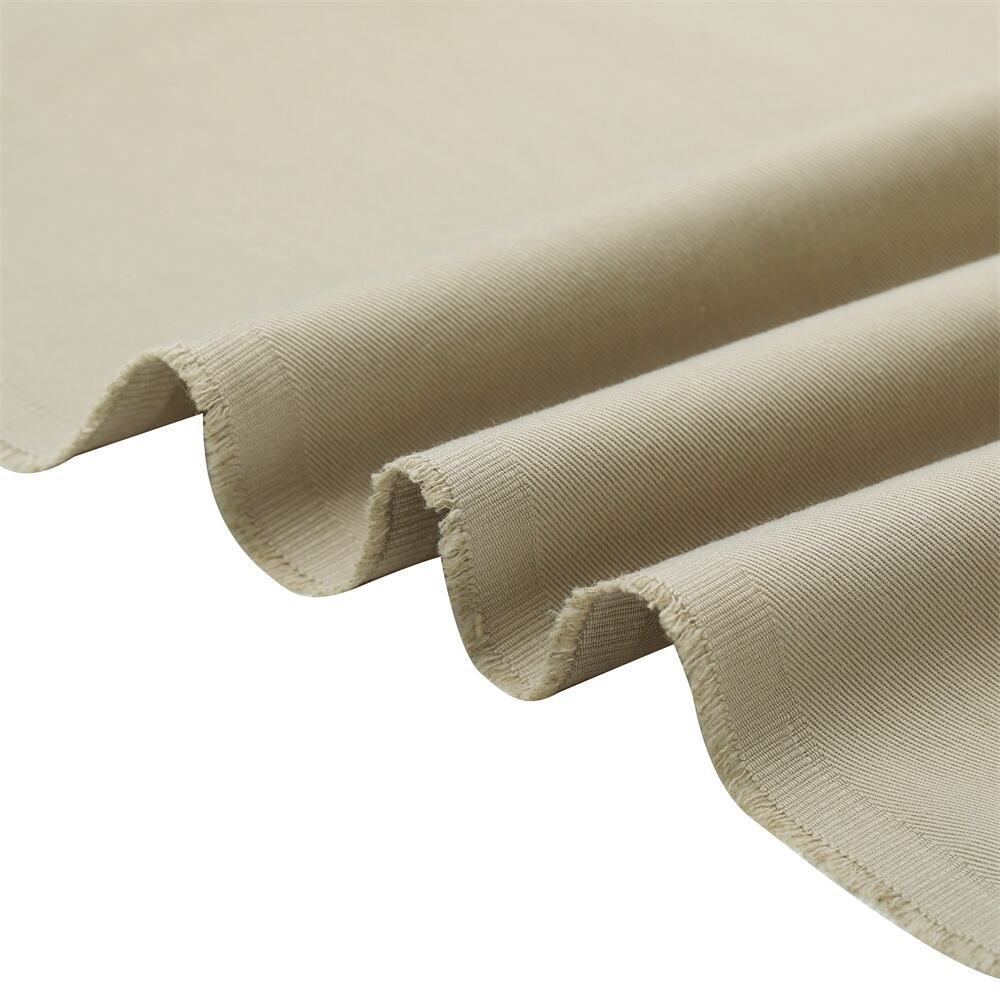
Durability and Long-Term Wear Resistance
Tensile strength and abrasion resistance in high-friction work environments
Poly cotton uniform fabric delivers exceptional mechanical resilience in high-friction environments. The polyester component reinforces fiber bonding, yielding up to 40% higher tensile strength than pure cotton while preserving flexibility—critical for roles in manufacturing, healthcare, and logistics where uniforms repeatedly contact equipment or surfaces. Independent testing shows poly cotton withstands 50% more abrasion cycles than 100% cotton under simulated industrial wear conditions. Its blended structure also resists surface pilling and retains structural integrity beyond 200 industrial washes—directly extending garment life and reducing replacement costs in physically demanding roles.
Poly cotton uniform fabric vs. 100% cotton and 100% polyester: lifespan and performance trade-offs
Poly cotton strikes a proven balance between natural comfort and synthetic durability. While 100% polyester offers superior abrasion resistance, its hydrophobic nature limits breathability and contributes to heat retention and static buildup—factors that impair all-day wearability. Pure cotton provides softness but loses 15–20% tensile strength after repeated laundering and shrinks significantly. In contrast, poly cotton retains 92% dimensional stability after 50 washes (per ASTM D629 and AATCC 135 standards) and delivers three times the tear resistance of cotton. Its hybrid architecture distributes mechanical stress across both fiber types, delaying fraying at seams and pockets. As a result, poly cotton uniforms last 30–40% longer than cotton equivalents—without the comfort compromises of all-polyester fabrics.
Low-Maintenance Performance: Wrinkle Resistance and Easy Care
How polyester content enhances wrinkle resistance without sacrificing comfort
Polyester fibers impart inherent rigidity to poly cotton uniform fabric, significantly reducing creasing during wear and laundering. This structural stability cuts ironing time dramatically—without introducing the stiffness common in 100% polyester textiles. The cotton component ensures next-to-skin softness and drape, allowing professionals to maintain crisp, professional appearances while retaining full mobility through extended shifts.
Wash fastness, minimal ironing, and consistent appearance after repeated laundering
The polyester content improves color retention, shrinkage resistance, and overall wash fastness—preserving uniform aesthetics across dozens of industrial laundering cycles. Where 100% cotton garments typically require 20–30 minutes of ironing per load, poly-cotton blends achieve workplace-ready presentation with ≤5 minutes of touch-ups—or often none at all.
| Maintenance Factor | 100% Cotton | 65/35 Poly-Cotton Blend |
|---|---|---|
| Avg. ironing time per load | 25 minutes | ≤5 minutes |
| Color fade after 50 washes | High | Low |
| Shrinkage rate | Up to 8% | ≤3% |
Data reflects commercial laundering results from Sourcing Journal’s Performance Textiles Review (2023). These advantages translate into measurable operational savings—lower labor input for maintenance, fewer replacements, and consistent brand representation across teams.
All-Day Comfort: Moisture Management and Breathability
Capillary action and blended fiber geometry for effective moisture-wicking
Poly cotton uniform fabric leverages capillary action to move sweat away from the skin efficiently. Polyester fibers form micro-channels that draw moisture outward, while cotton fibers spread it across the fabric surface for rapid evaporation. This dual-mechanism wicking keeps wearers dry and comfortable—outperforming 100% cotton, which absorbs but doesn’t actively transport moisture. Unlike 100% polyester, poly cotton avoids the clammy, trapped-heat sensation, delivering reliable moisture management even in hot, humid, or high-exertion settings.
Balancing breathability with durability in demanding operational settings
The fabric maintains airflow through its engineered weave—supported by polyester’s open structure—while resisting tears and abrasion far better than cotton alone. This synergy ensures sustained breathability in high-stress environments like manufacturing plants, warehouses, or outdoor worksites, without sacrificing longevity. It avoids the key limitations of single-fiber alternatives: polyester’s tendency to trap heat and cotton’s rapid degradation under mechanical stress. The result is consistent thermal regulation, reduced skin irritation, and uninterrupted worker focus and safety.
Dimensional Stability: Shrinkage Resistance and Fit Retention
Dimensional stability—the ability to retain original shape and size despite repeated laundering and environmental stress—is essential for functional, professional workwear. Unstable fabrics shrink, warp, or vary in sizing across batches, causing discomfort and logistical strain for uniform managers. Poly cotton excels here: polyester’s molecular resistance to contraction limits total shrinkage to under 2%, compared to up to 5% for pure cotton—especially under hot-water cycles. Unlike 100% polyester, which can stretch permanently under tension, poly cotton preserves fit integrity across repeated high-temperature industrial washes. This consistency eliminates “shrunken collar” or “shortened sleeve” complaints, reduces replacement frequency, and ensures reliable sizing across large-scale uniform programs—supporting both employee satisfaction and operational efficiency.
FAQ
What makes poly cotton more durable than pure cotton?
Poly cotton combines the tensile strength of polyester and the comfort of cotton, delivering up to 40% higher tensile strength and resistance to abrasion than pure cotton. It can also endure more industrial launderings without compromising integrity.
How does poly cotton compare to 100% polyester in terms of breathability?
Unlike 100% polyester, which can trap heat and cause discomfort, poly cotton balances durability and breathability. Its blend allows airflow and moisture-wicking while avoiding the heat retention typical of polyester.
Why is poly cotton low-maintenance?
Polyester fibers in poly cotton reduce wrinkle formation and minimize ironing time. Additionally, the fabric retains color better and resists shrinkage, ensuring a fresh, professional appearance even after numerous washes.
Does poly cotton shrink over time?
No, poly cotton has excellent dimensional stability with less than 2% shrinkage after multiple hot-water washes, compared to up to 5% for pure cotton fabrics.
Is poly cotton suitable for high-stress industrial environments?
Yes, poly cotton excels in high-stress environments, providing durability and abrasion resistance while maintaining comfort, breathability, and structural integrity over time.